
Identity Architecture™
What if the reason some parts of your life refuse to change isn't what you're doing
— but what you're doing it from?
You can change jobs and recreate the same pressure, change relationships and encounter the same dynamic. Change strategy and find yourself hitting the same ceiling. Work on yourself for years — and still discover that something fundamental feels unchanged.
Different circumstances. Remarkably familiar experiences.
What if this isn't random? What if there is an invisible architecture beneath the experience?
Of course, these things matter. They influence us in countless ways. Yet the longer I observed human beings, the more I realised they could not fully explain the lives people were creating.
- Why could two people experience almost identical circumstances and produce entirely different realities?
- Why would one person repeatedly create healthy relationships while another seemed to attract the same painful dynamics, regardless of who they met?
- Why could someone possess extraordinary intelligence, remarkable opportunities and clear strategies, yet continually fall short of what they were capable of creating?
- And why did another person, with fewer apparent advantages, seem able to move through life with a sense of ease, trust and flow?
The answers we usually receive tend to focus on individual pieces of the puzzle.
- Psychology explains our conditioning
- Neuroscience explains the brain
- Personal development teaches habits and mindset
- Trauma work explores the nervous system
- Spiritual traditions speak about consciousness, karma, purpose and the soul.
Each perspective offers something valuable. Yet each remains incomplete on its own.
Over time, I came to see that they were not separate explanations competing with one another. They were describing different parts of the same invisible architecture.
This is what I now call Identity Architecture™.
Identity Architecture™ is not simply the way we think about ourselves. It is the invisible system through which we experience reality.
It includes the identity we have learned to become, the way our nervous system has adapted to life, the perceptions through which we interpret the world, the emotional patterns that repeatedly arise, the energetic state from which we create, and the deeper soul-level structures that quietly organise our experience.
None of these operate independently. They constantly influence one another. Together, they determine far more than our behaviour. They shape what feels possible.
They influence the opportunities we recognise, the relationships we create, the decisions that feel natural, the risks we are willing to take, the fears we continually experience, and ultimately the reality we repeatedly generate.
This is why changing the mindset or behaviour alone rarely creates lasting transformation. Each are one expression of architecture. None is the architecture itself.
For many years, personal development has focused primarily on helping people think differently, behave differently or perform differently. These approaches can produce meaningful improvements. They can create greater confidence, better communication, stronger leadership and healthier habits.
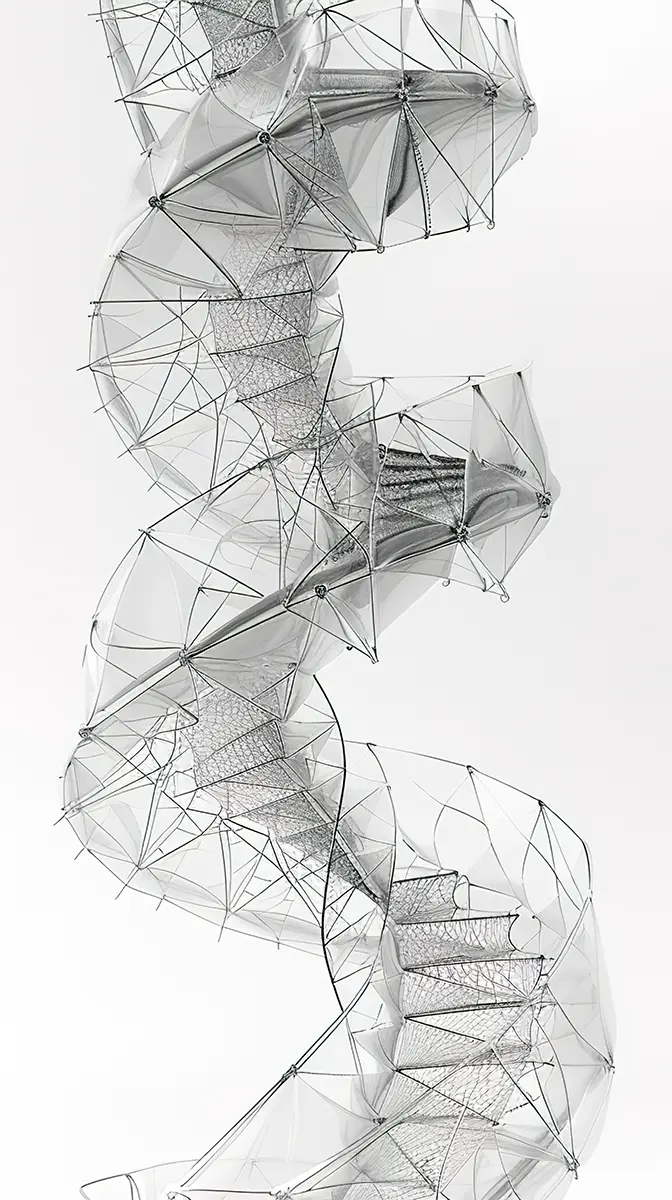
Yet many people eventually discover that, despite all this growth, something fundamental remains unchanged.
They continue creating variations of the same life.
- Different jobs
- Different relationships
- Different businesses
- Different circumstances
- Remarkably similar experiences
The invisible architecture has remained intact.
Perhaps this explains why so many people work tirelessly on themselves while still wondering why life still feels harder than it should. The internal architecture continues generating familiar realities because it has never been invited to reorganise itself.
One of the most profound discoveries of my own journey was recognising that human beings do not simply experience reality. We participate in creating it through the internal architecture from which we perceive and respond to life.
The world we experience is never completely objective. It is filtered through the identity from which we are living.
This understanding has transformed the way I see people. I no longer ask what is wrong with someone. I ask what invisible architecture is creating the experience they are having.
That question changes everything. Because once we can see the architecture, we stop fighting the symptoms, and begin understanding the source.
And it is only at the source that lasting transformation becomes possible.